

Can Shamanic Healing for PTSD Help?
- Jeremy

- Apr 23
- 6 min read
Some people living with PTSD can describe their symptoms with clinical precision, yet still feel like no one has touched the deeper wound. They know the hypervigilance, the shutdown, the anger, the looping memories, the broken sleep. What they often struggle to explain is the feeling that part of them never fully came back. That is where shamanic healing for PTSD begins to make sense for many survivors.
For veterans, first responders, grief survivors, and people carrying years of unresolved trauma, PTSD is not always just a mental health diagnosis. It can feel spiritual. It can feel energetic. It can feel like your body is in one place while your life force is stuck somewhere else entirely. When that is your reality, a healing path that speaks to the soul as well as the nervous system can feel less like a fringe idea and more like the first honest answer you have heard.
What shamanic healing for PTSD is really addressing
Shamanic healing starts from a different map of suffering. Instead of looking only at symptoms, it asks what was fractured, lost, attached, or frozen when the trauma happened. In this view, traumatic events do not just create stress responses. They can leave energetic imprints, spiritual disconnection, ancestral burdens, and a deep loss of personal power.
That does not mean psychology is wrong. It means trauma can be bigger than one framework. Many people with PTSD have already tried talk therapy, medication, or other structured approaches. Some found relief. Some found partial relief. Some felt more managed than healed. The reason they seek spiritual care is often simple - they know something deeper still needs attention.
In trauma-informed shamanic work, healing may involve clearing heavy energy, restoring parts of the self that withdrew during overwhelming events, working with grief that never fully moved, or addressing patterns that feel older than this lifetime or this incident. For some people, especially those with military trauma or repeated exposure to crisis, this wider lens helps explain why the pain has been so stubborn.
Why PTSD can feel spiritual, not just psychological
PTSD often changes a person’s relationship to safety, trust, identity, and meaning. After enough trauma, people do not just say, “I feel anxious.” They say, “I don’t know who I am anymore.” They say, “I feel numb.” They say, “I left part of myself over there.” That language matters.
Trauma can create a split between the self that survived and the self that feels fully alive. You may still function. You may work, parent, train, or show up for others. But inside, there is exhaustion, disconnection, and the constant sense that your spirit is braced for impact.
This is one reason shamanic healing can resonate so strongly. It gives language to what many trauma survivors already feel in their bones. The work does not ask you to reduce your experience to a list of symptoms. It acknowledges that trauma can disturb the energetic field, disrupt inner alignment, and leave behind more than memory.
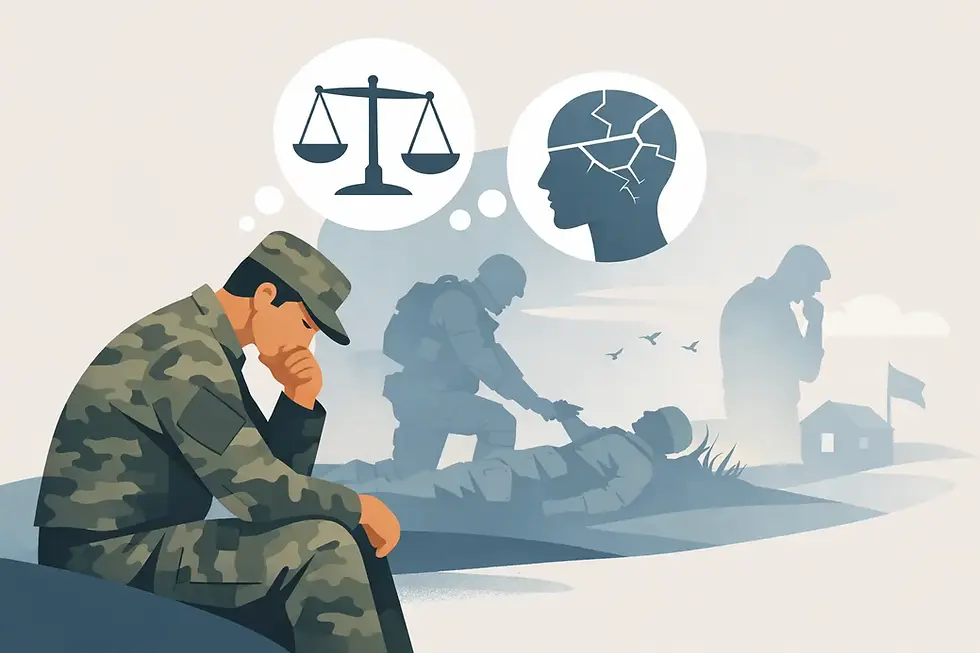
For some, there is also a layer of spiritual injury. This can happen after combat, moral injury, loss, abuse, or witnessing human suffering over and over. The wound is not only fear. It is the collapse of meaning. Healing then has to include more than calming the body. It has to help restore the relationship with self, spirit, and life itself.
How shamanic healing may support trauma recovery
A real trauma-informed shamanic approach is not about dramatic promises or spiritual performance. It is about careful, grounded work with someone who respects the seriousness of PTSD and understands that safety comes first.
In a session, the focus may be on identifying where energy feels blocked, where trauma is still actively gripping the body, or whether there are burdens that do not belong to the client at all. Some people experience this as a release of pressure, a return of clarity, or a deep emotional shift that had not happened through talking alone. Others notice that their sleep improves, their triggers soften, or they no longer feel so spiritually compressed.
This kind of healing can be especially meaningful for people who feel emotionally flat or cut off from themselves. When trauma forces someone into survival mode for years, it is common to lose access to joy, intuition, and inner steadiness. Shamanic work aims to help restore those capacities, not by forcing catharsis, but by clearing what is interfering with them.
There is also a practical side to this. Energetic and spiritual work can help people feel more regulated, more present in their body, and less engulfed by old material. That does not mean every session feels easy. Sometimes healing brings buried grief, anger, or fatigue to the surface. But when the process is handled well, it supports integration rather than overwhelm.
Where this fits with therapy, coaching, or medical care
For many people, the best answer is not either-or. It is both-and.
Shamanic healing for PTSD can complement therapy, peer support, body-based trauma work, or medical treatment. It may help where words have reached their limit. It may also help people reconnect with motivation for other forms of care because they finally feel something moving.
There are times when a person needs licensed clinical support, crisis care, medication management, or substance use treatment. Spiritual healing should never be used to shame those choices. It should also never pretend to replace emergency or psychiatric care when those are needed. Strong practitioners know the difference.
The deeper truth is that trauma recovery is rarely linear. Different layers need different tools. A person may need counseling for coping skills, community for connection, and spiritual healing for the energetic or soul-level wounds that still feel unresolved.
What to look for in trauma-informed shamanic support
Not all spiritual practitioners are prepared to work with PTSD. That matters.
If you are considering this path, look for someone who understands trauma responses, moves carefully, and does not push intensity for the sake of effect. You want someone who respects the nervous system, understands dissociation, and does not interpret every symptom in grand spiritual terms. Grounded healing is usually the most effective healing.
It also helps when the practitioner understands the world you come from. Veterans and first responders, in particular, often need someone who recognizes operational stress, identity collapse after service, survivor guilt, and the long aftershock of being trained to stay ready for danger. That lived understanding can change the entire healing relationship.
This is one reason some people feel safer working with practitioners who have personal experience with trauma recovery and who speak plainly about the work. At PNW Shamanic Healing, that trauma-informed, mission-driven approach is central. The goal is not to impress people with spiritual language. It is to help them come back to themselves.
The trade-offs, doubts, and honest questions
It is fair to be skeptical. Many people searching for deeper healing have already been disappointed, overpromised, or made to feel broken by systems that did not help. They may hear the word shamanic and wonder whether this is real, safe, or useful.
Those questions deserve honest answers. Shamanic healing is not a magic fix. It does not erase trauma overnight. It is also not something to pursue just because you feel desperate and want one more thing to work. The best results usually come when the person is ready for a deeper process and the practitioner is skilled enough to guide it with humility.
It also depends on what PTSD looks like in your life right now. Someone who is severely destabilized may need more immediate clinical containment before engaging deeper spiritual work. Someone else may be stable enough to benefit from energetic clearing, grief work, breath-informed support, or ancestral healing right away. The right pace matters.
And yes, language matters too. Some people connect immediately with terms like soul loss, energetic attachment, or spiritual burden. Others do not. That is okay. You do not have to force a belief system to receive support. What matters most is whether the work helps you feel safer, clearer, more whole, and more connected to your own life.
When this path may be calling you
If you have done the work and still feel like something is missing, pay attention to that. If your symptoms are managed but your spirit still feels absent, pay attention to that. If you know the trauma story by heart but your body and energy still act like the event is happening now, that is not failure. It may be a sign that another layer of healing wants to be addressed.
PTSD can make people feel trapped in a version of themselves built entirely around survival. Shamanic healing offers another possibility. Not denial. Not bypassing. Not pretending the past did not happen. It offers a way to clear what trauma lodged in the system, restore what was lost, and begin relating to life from something other than constant defense.
You do not need to explain your pain perfectly to deserve that kind of help. Sometimes the next step is simply being willing to believe that your healing may be deeper than symptom control, and that your spirit is still worth bringing home.


Comments