

Energy Healing for Addiction Recovery
- Jeremy

- Apr 28
- 5 min read
Addiction rarely begins with the substance alone. For many people, it starts with pain that never had a safe place to go - combat stress, childhood trauma, grief, betrayal, loss of identity, or a nervous system that has been running on survival for far too long. That is why energy healing for addiction recovery can matter so deeply. It speaks to the part of recovery that many people feel but cannot always explain: the emptiness, the agitation, the spiritual exhaustion, and the sense that something deeper is still unresolved even after trying to get clean.
For some, conventional treatment is life-saving. Meetings, rehab, therapy, medication, and accountability can all play an important role. But many people also discover that stopping the behavior does not automatically heal the wound beneath it. If the trauma is still active in the body, if the shame is still lodged in the heart, or if the person still feels cut off from their own spirit, the pull to numb can remain strong.
That is where a deeper healing approach can support the work.
What energy healing for addiction recovery is really addressing
Energy healing for addiction recovery is not about pretending addiction is simple or purely spiritual. It is about recognizing that addiction often has emotional, energetic, ancestral, and trauma-based layers that are not fully resolved through willpower alone.
When someone has lived through chronic stress or overwhelming events, their system can become conditioned to brace, dissociate, self-abandon, or seek relief at any cost. In that state, substances and compulsive behaviors can become a form of survival. They may be destructive, but they often began as a desperate strategy to regulate unbearable internal pain.
From an energy healing perspective, addiction can be connected to fragmentation, depletion, and disconnection from the self. A person may feel ungrounded, emotionally flooded, numb, or spiritually cut off. They may carry grief that was never processed, guilt that hardened into identity, or patterns inherited through the family line. Some also feel weighed down by heavy energetic imprints from trauma, environments, or relationships.
This does not replace the medical or psychological understanding of addiction. It adds another layer. It asks a different question: what is this substance or behavior trying to help the person escape, suppress, or survive?
Why trauma and addiction are so often intertwined
Anyone who has worked closely with addiction long enough sees the same truth. Very often, there is trauma underneath it.
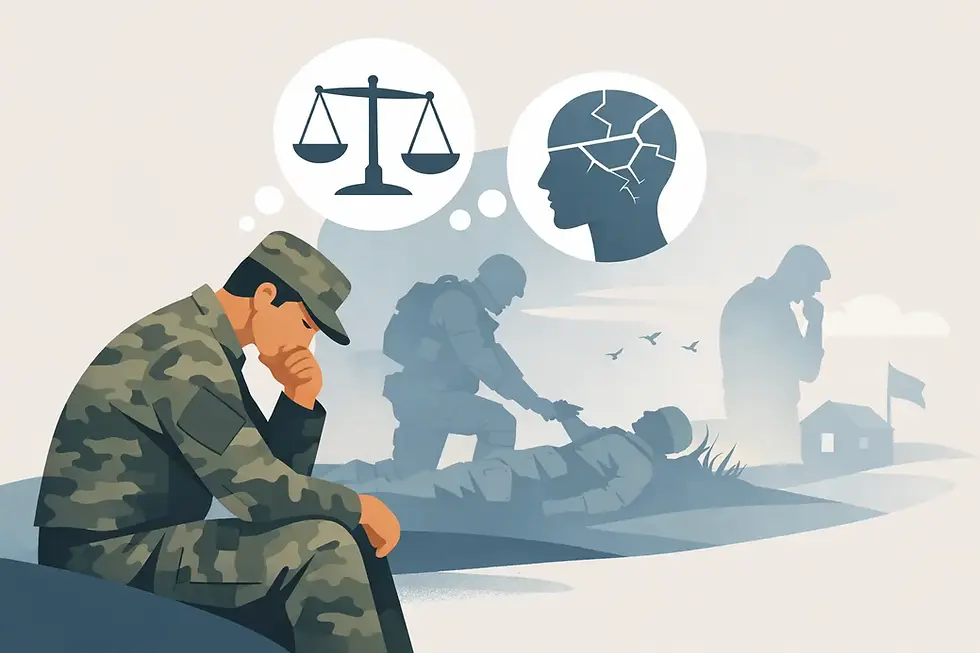
That trauma may look obvious, like violence, military service, abuse, or a devastating loss. It may also be quieter and still profound - growing up around chaos, never feeling safe, carrying impossible expectations, or spending years in a profession where stress became normal and emotional shutdown became necessary.
Veterans, first responders, and trauma survivors know this terrain well. The body learns to stay alert. Sleep gets disrupted. Emotions get compartmentalized. Connection becomes harder. Relief starts to feel urgent.
In that kind of internal environment, addiction is not just about craving. It can be about finally getting a break from hypervigilance, intrusive memories, panic, shame, or the deadness that follows prolonged survival mode.
That is why trauma-informed healing matters. If a person only fights the addiction without tending to the underlying pain, recovery can feel like white-knuckling through a life that still hurts.
How energy healing may support recovery
Energy healing works differently than talk-based approaches. It can help calm the nervous system, bring awareness to what the body has been holding, and create space for emotional release and reconnection.
Some people come into a session feeling scattered, heavy, or completely cut off from themselves. What they need first is not more analysis. They need grounding. They need their body to stop feeling like a battlefield. They need help settling enough to feel what is there without being consumed by it.
That may include clearing dense or stagnant energy, addressing spiritual depletion, working with unresolved grief, or helping the client reconnect to parts of themselves that were buried under trauma and survival patterns. For some, ancestral healing is also part of the picture. Family addiction patterns do not always begin with the current generation. Sometimes what is being carried is older than the person realizes.
This kind of work can support recovery by helping people feel more regulated, more connected, and less driven by unconscious internal pressure. It can also strengthen intuition. That matters, because many people in addiction lose trust in their own inner signals. Part of healing is learning how to feel again without being ruled by every feeling.
What energy healing cannot do on its own
Spiritual work needs honesty. Energy healing can be powerful, but it is not magic in the casual sense, and it is not a shortcut around responsibility.
If someone is in active withdrawal, medically unstable, suicidal, or in immediate danger, they need the right level of medical and clinical support. If a person has no structure, no support system, and no willingness to change destructive behavior, an energy session alone is unlikely to create lasting recovery.
Healing works best when it is part of a broader commitment to truth. That may include therapy, recovery meetings, sobriety support, nervous system work, community, spiritual practice, and clear boundaries around the people and environments that feed relapse.
This is not an either-or path. For many people, it is both. Clinical support can help stabilize. Energy work can help address what still lives underneath the surface.
Signs that deeper energetic work may be needed
Sometimes a person has already done a lot of work and still feels stuck. They understand their patterns intellectually. They know what happened in their past. They may even have periods of sobriety. But the same heaviness keeps returning.
That can show up as repeated relapse after emotional triggers, intense shame that does not shift, feeling drained around certain people, chronic nightmares, a sense of spiritual oppression, or the feeling that part of the self never fully came back after trauma. Some people describe it as carrying a darkness they cannot name. Others say they feel numb no matter how much work they do.
When recovery keeps stalling in those places, it may be time to look beyond surface behavior and ask what else is asking to be healed.
A grounded path forward
The most effective healing is grounded, compassionate, and direct. It does not shame the addicted part, because that part developed for a reason. It also does not romanticize suffering or excuse harmful choices. Both truths have to be held at once.
A real healing path helps a person restore safety in the body, process trauma at the right pace, clear what does not belong to them, and rebuild a relationship with their own spirit. That work is especially meaningful for people who have spent years serving others while silently falling apart themselves.
At PNW Shamanic Healing, that approach is rooted in trauma awareness, spiritual discernment, and lived understanding of what it means to come back from deep internal fracture. For clients who feel they have tried everything else, that combination can offer a different kind of hope - not false hope, but the steady kind that comes from finally working at the level where the pain began.
Recovery is not just about removing a substance. It is about returning someone to themselves. When that happens, the need to escape often begins to loosen its grip. And even if the road takes time, a person can start to feel something they may not have felt in years: safe enough to stay present in their own life.


Comments