

11 Signs of Energetic Attachment
- Jeremy

- Apr 30
- 6 min read
Some people know something is off before they have words for it. They say, "I don’t feel like myself lately," or "It feels like something is hanging on me." When those experiences persist, many start searching for signs of energetic attachment because the usual explanations do not fully account for the heaviness, fear, exhaustion, or inner noise they are carrying.
This topic needs care. Not every difficult emotion, intrusive thought, or rough season points to an attachment. Trauma, grief, PTSD, addiction recovery, burnout, nervous system dysregulation, and lack of sleep can all create symptoms that feel spiritual because they affect the whole person. A grounded approach does not dismiss that reality. It also does not ignore the possibility that some people are carrying energy that is not theirs.
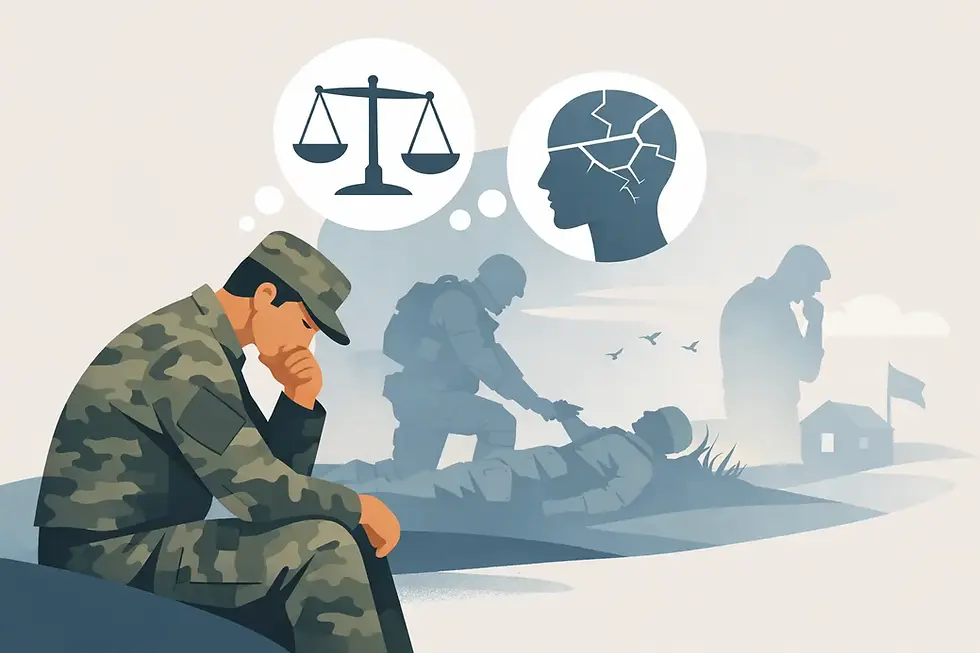
If you have been through combat, emergency response work, abuse, loss, spiritual opening, or a season of deep instability, your field may be more vulnerable than you realize. Openings can happen through trauma, chronic fear, substance use, severe grief, old family patterns, or time spent around chaotic people and environments. That does not mean you are weak. It means your system has been under pressure.
Common signs of energetic attachment
Energetic attachment often shows up as a pattern, not a single symptom. One hard week does not mean much by itself. But when several of these signs cluster together and keep repeating, it is worth paying attention.
1. You feel drained in a way that rest does not fix
This is more than being tired. You may sleep, take time off, eat better, and still wake up feeling burdened. The body can feel heavy. Motivation drops. There is a sense that your energy is leaking or being pulled. If the fatigue worsens after certain interactions, places, or emotional triggers, that detail matters.
2. Your mood shifts fast and feels foreign
Everyone has mood changes. With attachment, the shift can feel abrupt and strangely impersonal, almost like something moves through you rather than arising from your own emotional process. You may go from calm to rage, despair, panic, or numbness with no clear reason. Later, you look back and think, "That didn’t even feel like me."
3. You carry fear or dread without a clear source
Many trauma survivors know what hypervigilance feels like. This is why discernment matters. But sometimes the fear has a different quality. It may intensify in certain rooms, during the night, or when you are alone and otherwise safe. It can feel watched, pressed on, or accompanied by a sense of unwanted presence.
4. Recurring intrusive thoughts become unusually aggressive
Intrusive thinking can come from trauma, anxiety, OCD patterns, or stress. Energetic attachment is not a catch-all explanation. Still, some people describe thoughts that are repetitive, dark, self-attacking, and out of proportion to their normal inner voice. The content often pushes shame, hopelessness, self-harm, relapse, or isolation. If your thoughts suddenly turn hostile in a way that feels inserted rather than personal, pay attention.
5. You keep getting pulled back into destructive patterns
Attachment can feed what is already wounded. If there is unresolved grief, addiction, rage, or despair, that energetic opening may be exploited. People often notice a cycle where they are doing better, then get dragged back toward substances, chaos, dangerous relationships, or self-sabotage with unusual force. It can feel like a compulsion that strengthens when you try to reclaim yourself.
6. Nighttime disturbances increase
This may look like vivid nightmares, sleep paralysis, waking between certain hours, sensing a presence in the room, or dread that rises at bedtime for no obvious reason. Not every nightmare is spiritual. Trauma absolutely affects sleep. But if nighttime becomes a repeated zone of pressure, heaviness, or fear, it belongs in the conversation.
7. You feel unlike yourself after being around certain people
Some attachments are not just about places. They can become entangled through relationships marked by manipulation, violence, addiction, obsession, or intense dependency. If contact with a specific person leaves you foggy, depleted, agitated, or emotionally contaminated for hours or days, your system may be holding more than stress. This is especially true when boundaries have been weak or repeatedly violated.
8. Spiritual practices suddenly feel blocked or distorted
People who pray, meditate, do breathwork, or work with ceremony often notice when their connection changes. You may feel cut off from peace, unable to settle, or met with inner static the moment you try to center yourself. Sometimes there is resistance to any practice that would strengthen your clarity. That resistance can be subtle at first, then become intense.
9. Your body reacts even when your mind is trying to stay grounded
The body often tells the truth before the mind catches up. Chills, pressure on the chest, nausea, headaches, heaviness in the shoulders, sudden agitation, or a drop in energy during certain conversations or spaces can signal energetic distress. Of course, medical causes should never be ignored. But when the body repeatedly reacts in spiritually charged moments, that pattern matters.
10. You feel cut off from your own will
One of the clearest signs is a loss of inner authority. You know what is good for you, but you cannot seem to follow through. You feel disconnected from your own center, as if your choices are being pushed sideways. This is different from simple indecision. It feels like your yes is weak, your no is weaker, and your energy is no longer fully yours.
11. People around you notice the change
Loved ones may say your eyes look different, your energy feels off, or your personality seems altered. They may notice more agitation, withdrawal, volatility, or emptiness. Outside observation is not proof by itself, but when trusted people reflect the same concern, it can help cut through denial.
When trauma and energetic attachment overlap
For veterans, first responders, abuse survivors, and grieving people, this is where things get layered. Trauma can create fragmentation, hypervigilance, dissociation, sleep disruption, intrusive thoughts, and emotional numbing. Those are real nervous system responses. They deserve respect and proper support.
At the same time, trauma can leave a person spiritually open. If your boundaries were shattered by violence, loss, or repeated fear, the energetic field may be compromised. In practice, that means someone can be dealing with both unresolved trauma and attachment at once. If you address only one layer, relief may be partial.
That is why a trauma-informed spiritual approach matters. Shame is not helpful here. Fear is not helpful either. The goal is not to label every struggle as dark energy. The goal is to discern what belongs to your healing process, what belongs to your nervous system, and what may need clearing.
What to do if these signs of energetic attachment feel familiar
Start simple. Ground your body. Eat solid food, hydrate, reduce substances, and get out in nature if you can. Clean your living space. Limit contact with people who reliably leave you dysregulated. Notice when symptoms intensify and what seems to trigger relief. Patterns reveal a lot.
It also helps to strengthen your own authority out loud. Prayer, intention, breath, and boundary-setting are not small things. If you feel spiritually overwhelmed, say clearly that anything not of your highest good is not welcome in your body, mind, home, or field. Speak with conviction, even if your voice shakes.
If symptoms are severe, persistent, or escalating, get support. That may include mental health care, medical evaluation, or working with an experienced trauma-informed practitioner who understands both spiritual clearing and the realities of PTSD, grief, addiction, and dissociation. A good practitioner will not feed paranoia. They will help you come back into your body, your power, and your discernment.
At PNW Shamanic Healing, this is approached with both spiritual precision and respect for lived trauma. That matters because vulnerable people do not need dramatic claims. They need grounded help.
A final word on discernment
The most damaging thing you can do is either dismiss your experience completely or hand your power over to fear. Healing usually asks for a steadier middle path. Stay honest about what you are feeling. Stay cautious about easy labels. And remember that whether you are dealing with trauma, grief, attachment, or some combination of the three, what is yours can be restored, strengthened, and brought back home.


Comments