

What Is Spiritual Trauma?
- Jeremy

- Apr 19
- 6 min read
Sometimes the wound is not just in your mind or body. Sometimes it shows up as a loss of trust in life itself - in God, in your path, in your own inner knowing. If you have been asking what is spiritual trauma, you may already know the feeling. It can look like anxiety, numbness, grief, rage, addiction, hypervigilance, or deep exhaustion. But underneath those symptoms, there is often something more painful - a rupture in meaning, safety, connection, and identity.
Spiritual trauma happens when a person goes through experiences that damage their relationship to the sacred, to themselves, or to the deeper sense that life has purpose and coherence. For some people, this comes from religious abuse or spiritual manipulation. For others, it comes from war, sudden loss, betrayal, violence, childhood trauma, or surviving experiences that shattered their sense of reality. The outer event may be psychological and physical, but the impact reaches into the soul.
What is spiritual trauma, really?
At its core, spiritual trauma is a wound to your inner foundation. It affects the part of you that makes meaning, feels connected, and knows who you are beyond survival. When that layer gets injured, people often feel cut off from their intuition, from God or Spirit, from hope, or from their own basic sense of belonging in the world.
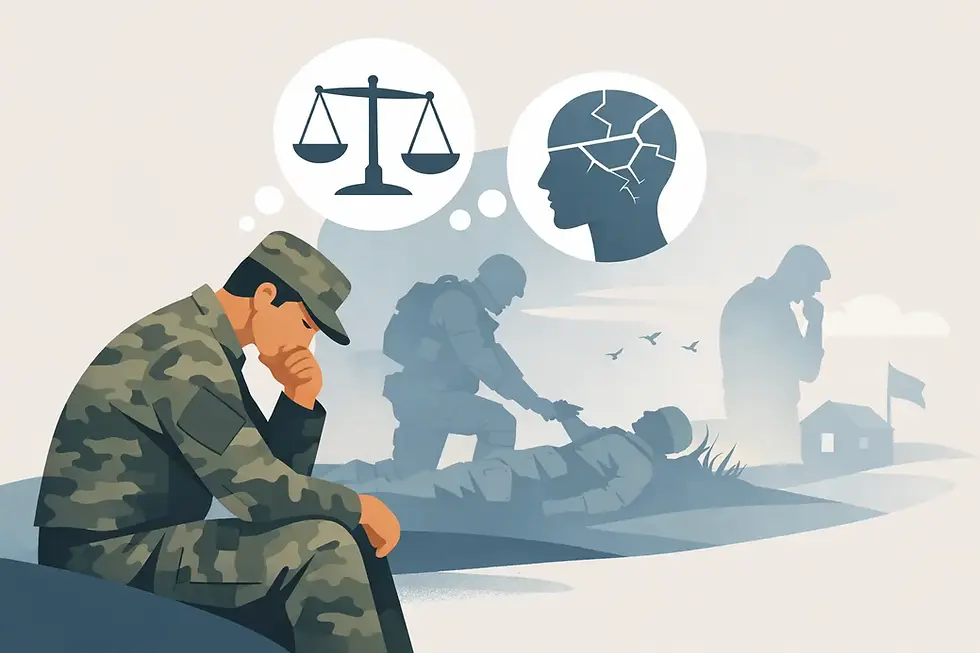
This is one reason spiritual trauma can be hard to name. A person may say, "I don't feel like myself anymore," or "I can't pray," or "I don't trust anything." A veteran may come home from deployment and feel unable to reconnect with who they were before. A first responder may carry years of death, chaos, and moral stress until the world feels spiritually empty. Someone raised in a controlling religious environment may leave the institution but still live with fear, shame, and confusion in their nervous system.
Not every painful spiritual experience becomes spiritual trauma. Sometimes a faith crisis is part of growth. Sometimes a season of doubt is healthy. The difference is that trauma overwhelms your capacity to process what happened. It leaves fragmentation behind. Instead of questioning and rebuilding, you feel trapped, cut off, or internally unsafe.
How spiritual trauma can begin
For some people, the source is obvious. Abuse by a religious leader, coercive teachings, public shaming, spiritual threats, or being told your suffering is your fault can leave deep scars. These wounds are not just about belief systems. They train the body to associate the sacred with fear.
For others, spiritual trauma begins through events that were not labeled spiritual at all. Combat, assault, childhood neglect, medical trauma, addiction, suicide loss, miscarriage, or witnessing sudden death can break a person's sense of order. You may start asking questions that have no easy answer. Why did this happen? Why was I spared? Why couldn't I protect them? Where was God? What kind of world is this?
That rupture matters. Human beings do not heal only through logic. We heal through meaning, connection, embodiment, and safety. When trauma tears through those layers, symptom management alone may not reach the root.
There is also an ancestral dimension that many people feel, even if they do not have language for it. Families can pass down fear, silence, addiction, grief, and survival patterns for generations. You may be carrying pain that did not begin with you, but still lives through you. In spiritual healing work, this is taken seriously because unresolved burdens often move through family lines until someone is ready to face them.
Signs you may be dealing with spiritual trauma
Spiritual trauma does not look the same for everyone, but certain patterns show up often. Some people feel abandoned by God or betrayed by a spiritual community. Some become numb to anything sacred. Others feel spiritually open in a way that is not peaceful at all - scattered, ungrounded, flooded, or vulnerable to dark, intrusive energy.
You might notice chronic shame that does not respond to reassurance. You might feel cut off from intuition and unable to trust your own discernment. You may have a strong reaction to prayer, worship, ritual, or even the idea of surrender. Some people swing the other direction and become desperate for spiritual answers, moving from healer to healer because nothing feels settled inside.
In the body, spiritual trauma can overlap with PTSD, anxiety, panic, insomnia, dissociation, and emotional shutdown. That overlap is real. This is not about pretending trauma is only spiritual. It is about recognizing that trauma often affects every layer of a person at once - mental, emotional, physical, energetic, and spiritual.
Why this kind of trauma is often missed
One reason spiritual trauma gets overlooked is that many systems are trained to treat only what can be measured quickly. If you are having nightmares, panic attacks, depression, or addiction struggles, those symptoms may be addressed without anyone asking what happened to your spirit.
On the other side, some spiritual spaces talk about energy and awakening while skipping over nervous system injury, grief, and the need for trauma-informed care. That can be harmful too. A person who is deeply activated does not need spiritual bypassing. They need grounded support. They need safety. They need someone who understands that clearing energy is not the same as ignoring pain.
This is where nuance matters. Therapy can help. Medical care can help. Peer support can help. Spiritual healing can help. It depends on the person, the severity of the trauma, and what kind of support is already in place. The strongest healing path is often not either-or. It is honest, layered care that addresses the whole human being.
What healing from spiritual trauma can look like
Healing usually begins when the person feels safe enough to tell the truth. Not the polished version. The real one. The part that says, "Something in me broke," or "I haven't felt whole since that happened." Naming the wound matters because what stays unnamed often keeps running the system.
From there, healing is less about forcing belief and more about restoring relationship. Relationship to your body. Relationship to your emotions. Relationship to your own inner knowing. Relationship to Spirit, if and when that feels right again. For some, this includes grieving the faith they lost. For others, it means reclaiming a spiritual path without shame, fear, or control.
A trauma-informed spiritual approach pays attention to pace. It does not push grand experiences on a dysregulated nervous system. It helps the person come back into their body, release stored fear and grief, clear what does not belong to them, and rebuild trust over time.
For some people, this includes breathwork, energy healing, ancestral healing, grief work, or shamanic practices that help restore lost power and clear heavy attachments. In the right hands, that work can be deeply stabilizing. But the right hands matter. Someone working with trauma should understand grounding, consent, pacing, and the difference between genuine healing and spiritual performance.
At PNW Shamanic Healing, this is why trauma-informed spiritual work matters so much, especially for veterans, first responders, and survivors carrying burdens that talk therapy alone has not fully touched. Many people are not just trying to feel less anxious. They are trying to come back to life.
What is spiritual trauma asking of you?
Not perfection. Not forced forgiveness. Not blind faith.
Usually, spiritual trauma is asking for honesty, support, and a new kind of relationship with your own healing. It asks you to stop minimizing what your soul has been carrying. It asks you to notice where fear, shame, grief, and disconnection have been living in your body and choices. And it asks whether the version of strength you learned in survival is still serving you.
If you come from military culture, first responder culture, or a family system where pain was swallowed and pushed down, this can be especially hard. You may know how to function while completely disconnected from yourself. You may know how to get through the day while carrying a deadened spirit. But surviving is not the same as being restored.
Healing does not always happen fast. Sometimes the first sign of change is small. A little more sleep. A little less dread. A quiet return of intuition. A moment of prayer that does not feel forced. A sense that your energy is your own again.
If that is where you are, be gentle with yourself. The fact that you are asking what is spiritual trauma may already mean that some deeper part of you is ready to be met. And when that part is finally met with skill, compassion, and spiritual clarity, something powerful begins to come back online - not the old version of you, but a truer one.


Comments